Exterior painting • Owner-accountable

Exterior Painting for Dallas–Fort Worth Homes

Texas sun and heat punish shortcuts. What makes an exterior last is thorough prep, honest repair of the wood underneath, and the right product for each elevation — with one person accountable for the result. Paint is the finish, not the job.

Owned and operated by Jeremy Greene. Serving Dallas–Fort Worth and the surrounding communities.

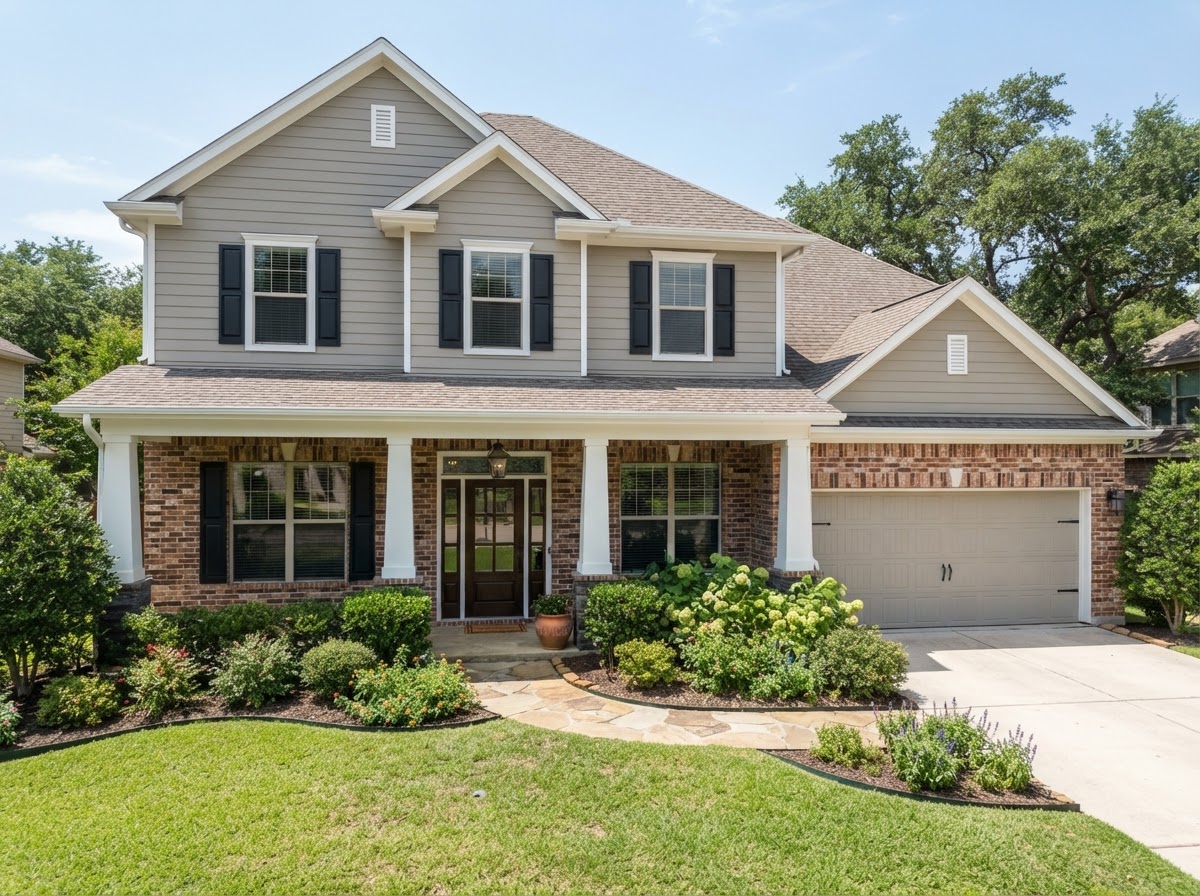
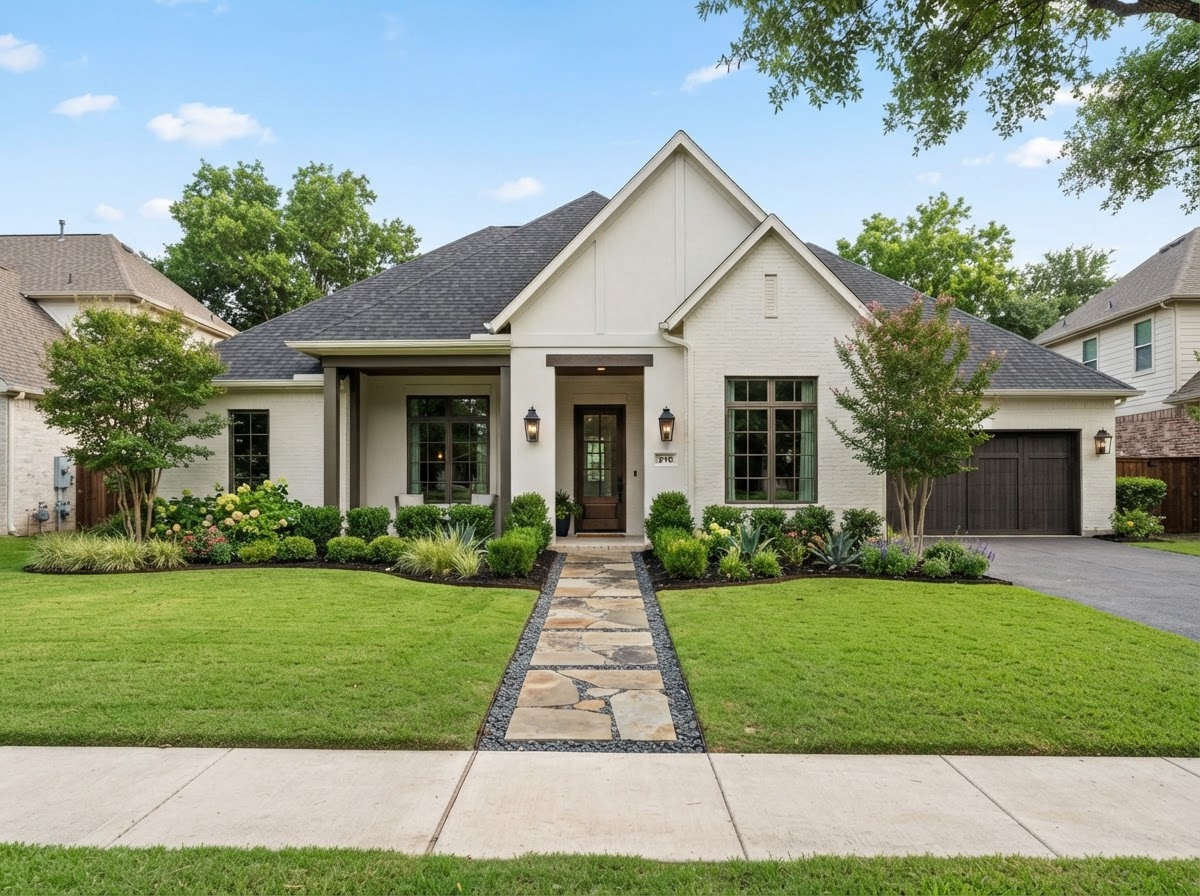
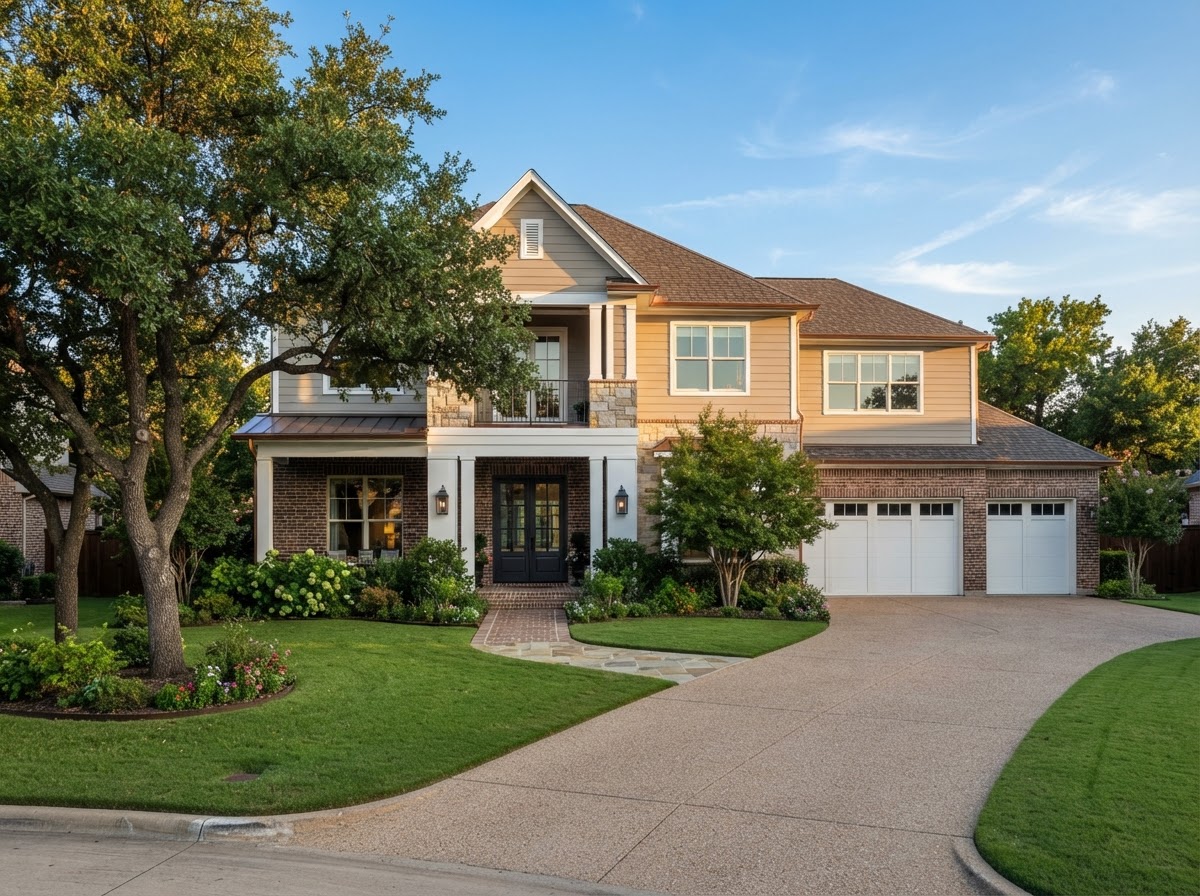
A freshly repainted two-story Dallas–Fort Worth home with warm greige siding, white trim, and brick, photographed in late afternoon light
  • Wood rot and carpentry repair included
  • Thorough prep and surface repair
  • Written scope, exclusions, and schedule
  • Final walkthrough on every project

Why exteriors fail early

You do not need five contractors. You need one trusted partner.

When an exterior repaint fails in two or three years, it is almost never the color. It is the work that happened before the color. Here is what we see most often on homes across North Texas, so you know what to ask any company you talk to.

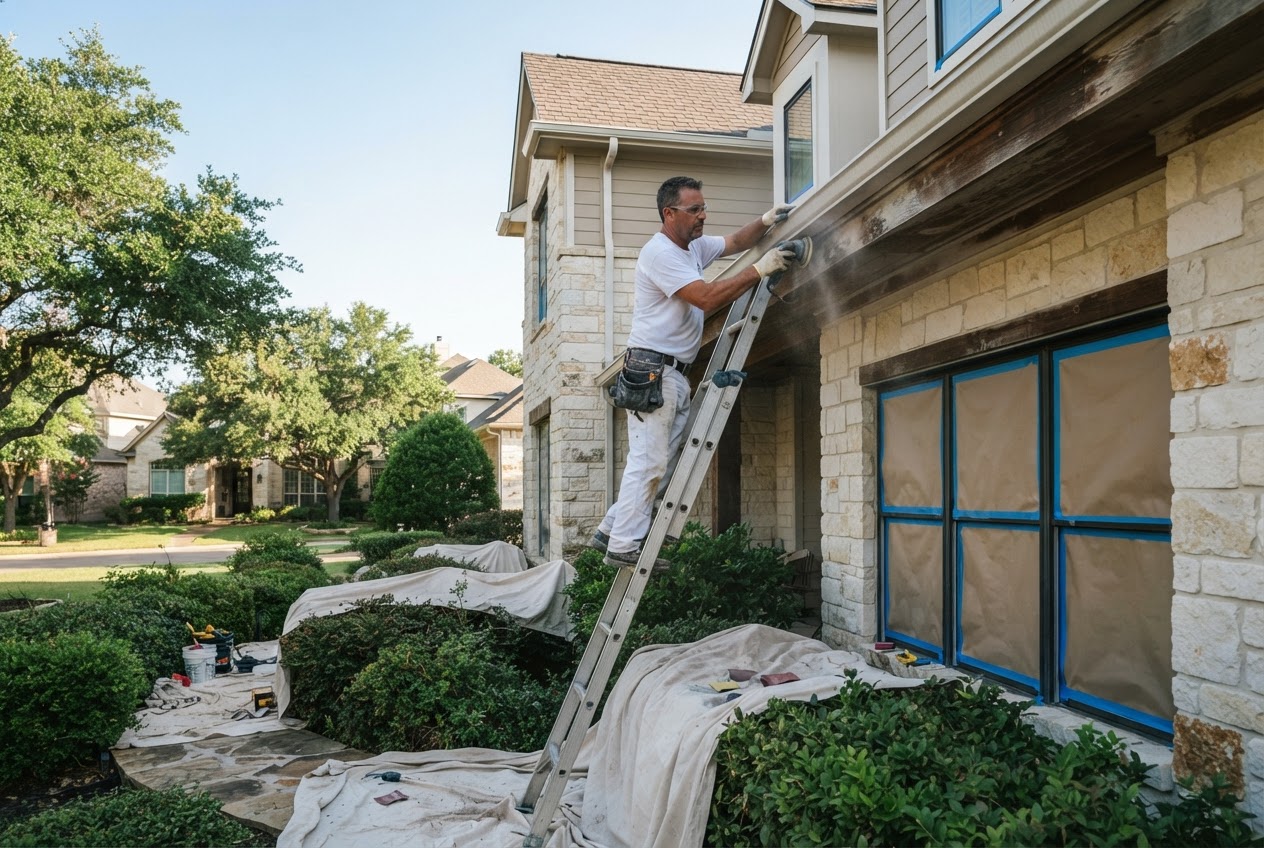
A painter sanding and scraping wood fascia trim from a ladder, with drop cloths over the shrubs and windows masked below
Preparation is most of the work. It is also the first thing a rushed crew skips.
  • Prep that gets skipped

    Chalked, dusty, or glossy surfaces need washing, scraping, sanding, and spot priming before coating. A crew moving fast can skip all of it, and the paint releases within a year or two.

  • Painting over rot

    Soft fascia, trim, and door casings do not stop deteriorating under a fresh coat. Coating over damage hides the problem until it costs considerably more to correct.

  • The wrong product for the elevation

    West- and south-facing walls take hours of direct afternoon sun. They need a product and sheen chosen for that exposure, not whatever was used on the shaded side.

  • Caulk and sealant done poorly

    Joints, seams, and penetrations are where water gets in. Old caulk that is painted over instead of cut out and replaced is one of the most common reasons a repaint fails early.

  • Spraying in the wrong conditions

    Surface temperature, humidity, and wind all affect how a coating cures and adheres. Working through conditions the product was not made for shortens the life of the finish.

  • Nobody accountable afterward

    When the crew that sprayed the house is not the company that answers the phone in year two, small issues have nowhere to go. Accountability is part of the product.

What we do

The whole exterior, handled by one company

Whether it is a full repaint or the trim and fascia alone, the same standard of preparation, product selection, and communication applies.

  • Full exterior repaints

    Every elevation washed, prepped, repaired, and coated on one schedule by one crew. You have one person accountable for the finish from the first walkthrough to the last inspection.

  • Siding, trim, fascia, and soffit

    The surfaces that take the most weather and show wear first. We sand, fill, prime, and coat them so the lines stay crisp instead of chalking within a season.

  • Wood rot repair and carpentry before paint

    Soft trim, damaged fascia, and failing corner boards are replaced or repaired before anything is coated. Paint over rot looks finished for a few months and then fails.

  • Front doors, garage doors, and shutters

    The details that carry the whole front elevation, finished with the care they deserve. Hardware is removed or protected rather than taped around.

  • Brick and stucco coatings

    Masonry and stucco cleaned, patched, and coated with products made to breathe and flex. This is a thoughtful way to update a dated brick color without replacing it.

  • Decks, fences, and patio covers

    Exposed structures cleaned, sanded, and finished with coatings selected for direct sun and rain. We tell you honestly when a board should be replaced rather than coated.

The Everett Standard

Six steps, every project

The same sequence on a trim package and on a full repaint, so you always know where the work stands and what comes next.

  1. 1

    Walkthrough and elevation assessment

    We walk each elevation with you, note surface condition, exposure, and any soft wood, and listen to what you want the house to look like.

  2. 2

    Written estimate and product spec

    You receive scope, repairs, the specific products for each surface, exclusions, and a schedule in writing, so nothing is left to interpretation.

  3. 3

    Wash and surface preparation

    The exterior is washed, then scraped, sanded, and spot primed where the existing coating has failed or the substrate is bare.

  4. 4

    Rot repair, caulking, and sealing

    Damaged wood is repaired or replaced, failed caulk is cut out and renewed, and joints and penetrations are sealed before any color goes on.

  5. 5

    Application and mid-project inspection

    Coating is applied elevation by elevation with an inspection partway through, so corrections happen while the crew is still on site.

  6. 6

    Final walkthrough and cleanup

    We review every elevation with you, complete touch-ups, and leave the landscaping, drives, and walks clean before we load out.

HOA and color selection

We handle the approval paperwork with you

Choosing colors and getting them approved is often the part homeowners dread most. It is a normal step in our process, not an extra errand we leave to you.

  • Color selection with a second opinion

    We help you weigh body, trim, and accent combinations against your brick, roof, stone, and the homes around you, so the result looks intentional from the street.

  • Samples placed on your house

    Colors read differently in Texas sun than they do on a fan deck. We place samples on the actual elevations so you can look at them in morning and afternoon light before deciding.

  • Documentation for HOA approval

    Many established DFW neighborhoods require a submittal before work begins. We prepare the color names, product information, and scope details your committee asks for.

Recent projects

A closer look at completed work

Each project below shows what the homeowner was dealing with, what we did, and the scope it took. Written details are placeholders until the case studies are published.

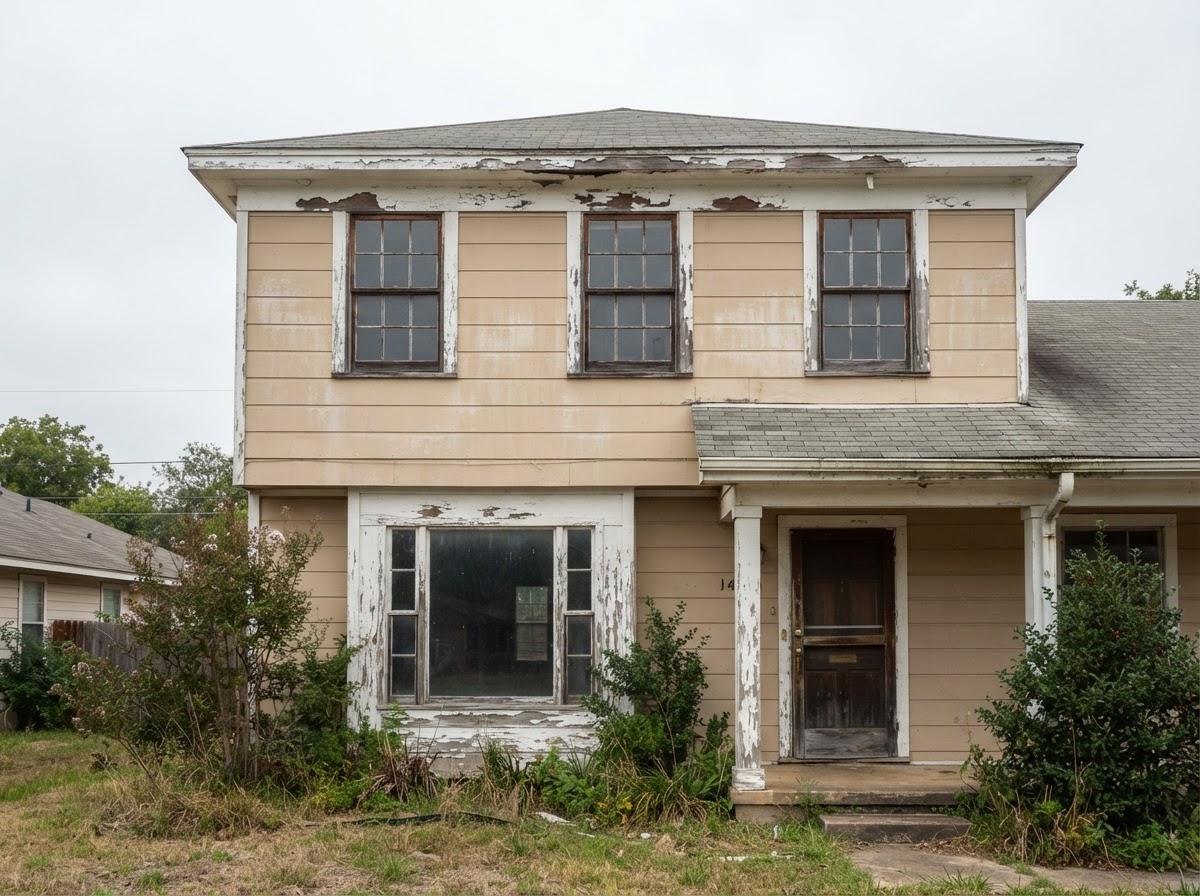
Two-story Southlake home before painting, with peeling white trim paint and chalked, faded siding
Before
The same Southlake home after painting, with repaired fascia, crisp white trim, and a warm greige exterior
After

Southlake, TX

The homeowner's problem
Placeholder case study. Peeling trim and chalked siding on the west elevation, with an HOA notice giving the homeowners sixty days to address the appearance.
What we did
Placeholder case study. Full wash, scrape, and sand, twenty-two feet of rotted fascia replaced, all caulk joints renewed, then siding and trim coated in a warm neutral with a darker trim accent.
Scope
Placeholder scope. 4,100 sq ft two-story • cedar siding and brick • 22 ft fascia replaced • 3 colors • 8 working days
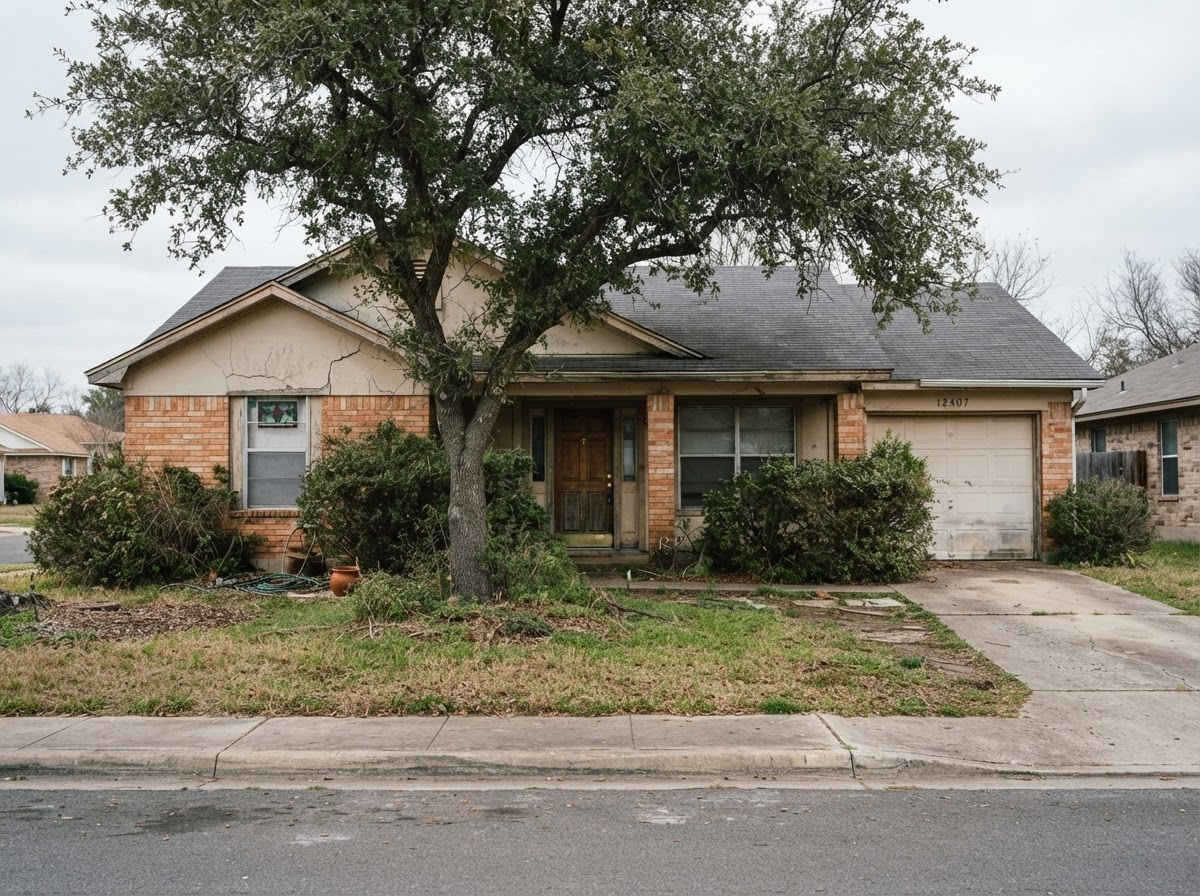
Single-story Highland Village home before coating, with dated orange-toned brick and cracked beige stucco
Before
The same Highland Village home after coating, with brick and stucco finished in a soft off-white
After

Highland Village, TX

The homeowner's problem
Placeholder case study. Dated orange-toned brick and stucco the homeowners did not want to replace before listing the home.
What we did
Placeholder case study. Masonry cleaned and patched, hairline stucco cracks sealed, then brick and stucco coated with a breathable masonry product in a soft off-white.
Scope
Placeholder scope. 3,400 sq ft single story • brick and stucco coating • stucco crack repair • 2 colors • 7 working days
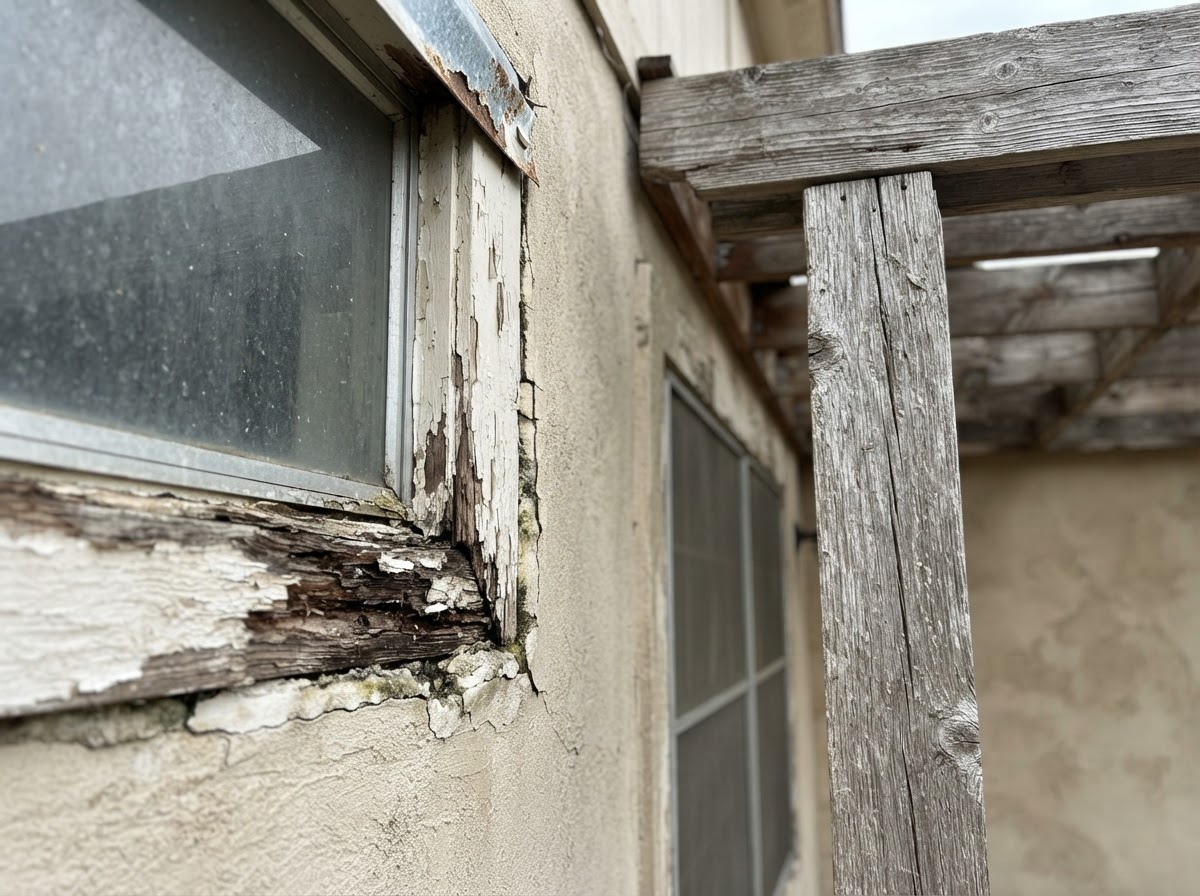
Close view of a Plano home before repair, with rotted window trim, peeling paint, and a weathered cedar patio cover
Before
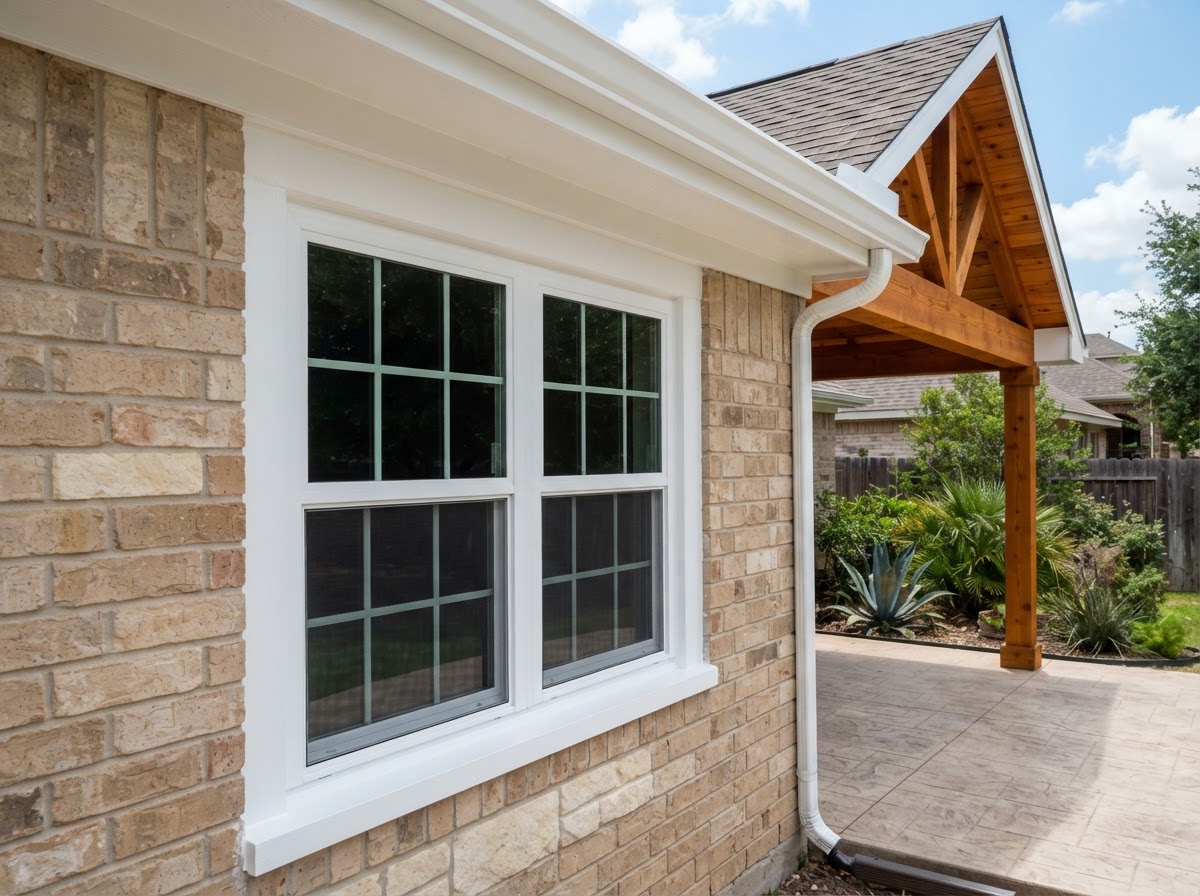
The same Plano window and patio cover after repair, with crisp white trim, clean caulk lines, and refinished cedar
After

Plano, TX

The homeowner's problem
Placeholder case study. Soft window trim and a weathered cedar patio cover on a home the owners planned to stay in for another decade.
What we did
Placeholder case study. Trim carpentry repaired at nine windows, patio cover sanded and refinished, then trim, fascia, soffit, and garage doors coated to match the existing body color.
Scope
Placeholder scope. Trim and fascia package • 9 windows repaired • cedar patio cover refinished • 2 colors • 5 working days

Reviews

What homeowners tell us afterward

Placeholder reviews shown below until verified homeowner reviews are added.

  • Placeholder review. They spent the better part of three days washing, scraping, and sanding before any paint came out, and Jeremy walked me around to show me every piece of soft wood he wanted to replace. That was the difference between his estimate and the other two.
    Karen M.Colleyville, TX
  • Placeholder review. I knew the plan for each day before it started, and when rain moved in we heard about the change that morning rather than wondering. The written scope matched exactly what happened on the house.
    David R.Frisco, TX
  • Placeholder review. My beds and stonework were covered every morning and uncovered every evening, and the crew swept the drive before they left each day. When they finished there was no tape, no overspray, and nothing for me to clean up.
    Susan T.Rockwall, TX

What affects the price

What actually moves the number

An exterior is priced on surface area, access, and condition. We would rather you understand that before an estimate than after, so you can judge any estimate you receive, including ours.

Square footage and number of stories
Surface area drives labor, and height drives access. A second or third story means staging, ladders, or lifts, and slower, more careful work.
Siding, brick, or stucco
Each substrate needs different preparation and different products. Masonry coatings and heavily weathered wood siding are not priced the same way.
Extent of wood rot and carpentry
Repair is measured in boards and hours, not square feet. The volume is usually clear at the walkthrough, and it belongs in the estimate rather than in a later change order.
Trim and window count
Trim, windows, and doors are detail work. A home with forty windows and heavy trim detail takes considerably longer than one with the same wall area and less detail.
Number of colors
A body, trim, and accent scheme is straightforward. Additional colors add masking, cut-in time, and product changes on every elevation.
Accessibility and elevation height
Steep grades, tight side yards, mature landscaping, and tall gable ends all affect how the crew reaches the surface safely.
Condition of the existing coating
A sound, well-maintained finish needs less preparation. Peeling, chalking, or previously mismatched coatings require real prep before anything new is applied.

Placeholder — typical investment ranges

  • Single-story exterior repaint, 1,800–2,500 sq ft — [placeholder range]
  • Two-story exterior repaint, 3,000–4,500 sq ft — [placeholder range]
  • Trim, fascia, and soffit package — [placeholder range]
  • Brick or stucco coating — [placeholder range]
  • Deck, fence, or patio cover refinishing — [placeholder range]

Replace these with real ranges from recent projects. Every home is measured and estimated individually, and wood repair is priced from what we find, so the written estimate is always the governing number.

Best time to paint in North Texas

Conditions matter more than the calendar

Exterior coatings have a temperature and humidity window where they cure properly. Knowing the seasons here helps you plan, and booking ahead of spring simply means you get the dates you want.

Spring — March through May
The most dependable window in North Texas. Mild surface temperatures and moderate humidity let coatings cure the way the manufacturer intended. It is also the busiest window, so schedules fill several weeks ahead.
Summer — June through August
Still workable, with planning. We follow the shade around the house and start early, because a west-facing wall in full afternoon sun can be far hotter than the air temperature allows for.
Fall — September through November
Often the best conditions of the year. Lower humidity and steady temperatures make for excellent adhesion, and repair work uncovered during prep can be handled before winter weather arrives.
Winter — December through February
Selective work only. Many exterior products need surface and overnight temperatures above a set minimum, so we schedule around warm stretches and are candid when it is better to wait.

Our spring and fall calendars are usually committed several weeks out. If you know you want the work done this year, an early walkthrough costs you nothing and protects your preferred window.

Service area

Where we work across the metroplex

  • Dallas
  • Fort Worth
  • Plano
  • Frisco
  • McKinney
  • Allen
  • Prosper
  • Arlington
  • Irving
  • Coppell
  • Carrollton
  • Lewisville
  • Flower Mound
  • Highland Village
  • Denton
  • Argyle
  • Southlake
  • Colleyville
  • Grapevine
  • Keller
  • Trophy Club
  • Richardson
  • Rockwall
  • Mansfield

If your neighborhood is near one of these communities and not listed, ask. We are often working close by.

Questions

Answers before you ask

Most homes in this market run five to twelve working days, depending on square footage, number of stories, trim detail, and how much repair the prep uncovers. Your written estimate includes a start date and a working-day count, and we tell you the same day if anything changes.

Request an estimate

Tell us about your home.

A few details up front means a more accurate estimate and less back-and-forth. We reply during business hours, usually the same day.

Exterior surfaces

Select everything that applies.

Details about problem areas — peeling trim, soft wood, or a weathered elevation — help us prepare before we arrive.

Prefer to talk it through? Call (817) 555-0142.

Call